
Why Prompt Engineering is the Ultimate Student Skill in 2026 (Introduction & BLUF)
AI Prompt Box
Simply asking ChatGPT to 'write an essay' or 'explain gravity' yields generic, low-quality results. In 2026, the key to academic success is prompt engineering—using structured, role-based commands to turn ChatGPT into a customized personal tutor.
By feeding ChatGPT specific parameters, you can generate high-yield study notes, simulate mock exams, proofread papers with strict criteria, and break down complex formulas. This shifts ChatGPT from a simple search tool to an interactive learning accelerator.
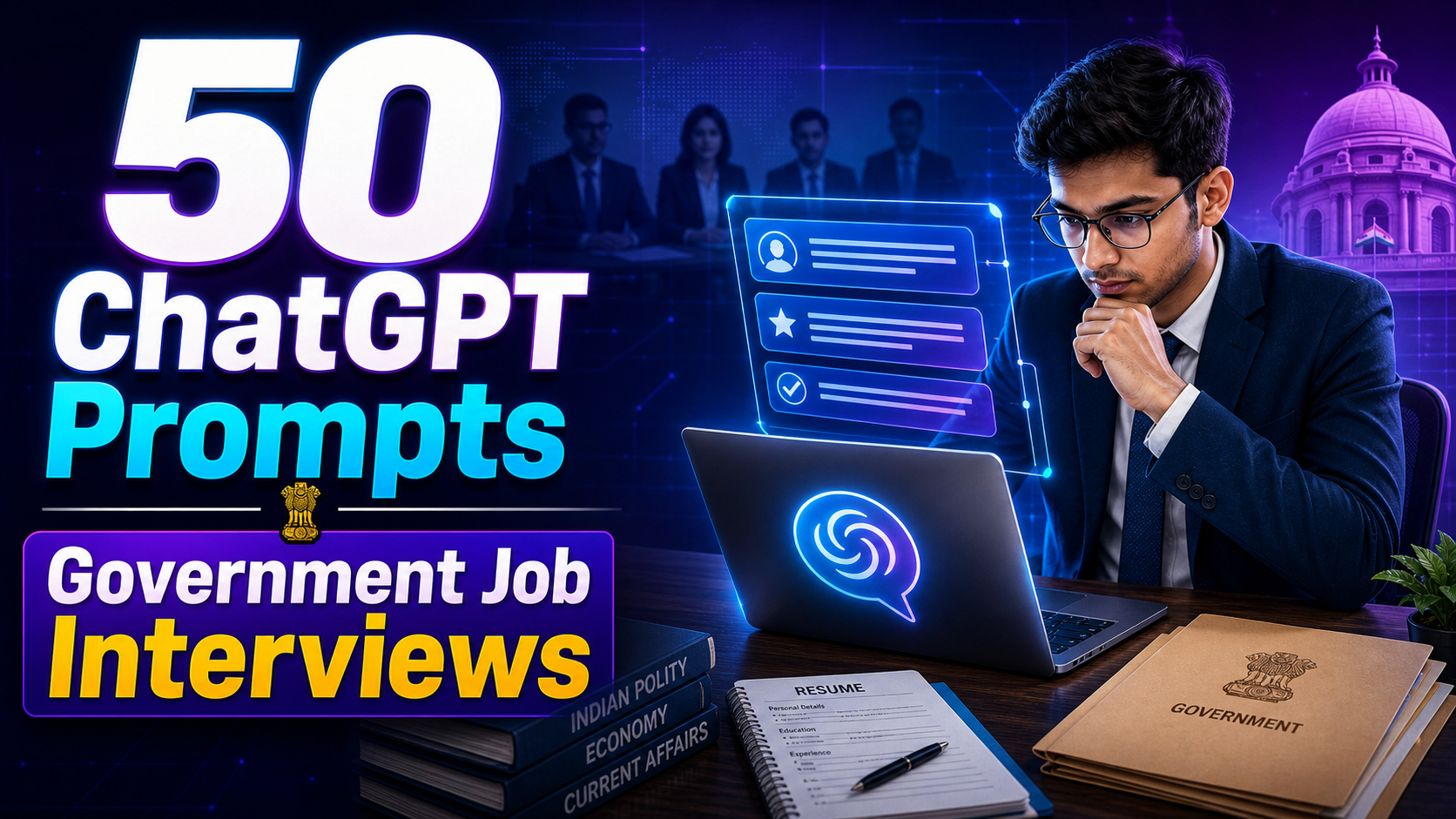
BLUF (Bottom Line Up Front): You can increase your study speed by 5x using 10 specialized, copy-ready ChatGPT prompts. These commands cover the 5 core pillars of student success highlighted in our thumbnail: Notes, Study, Research, Assignments, and Exams. Copy and paste these prompts (detailed below) into ChatGPT to study smarter, save hours, and score higher.
To combine these prompts with other student AI platforms, read our detailed guide on Best Free AI Websites for Students.
The Top 10 ChatGPT Student Prompt Matrix
AI Prompt Box
Different academic challenges require different prompting structures. Here is a comparative matrix of the top 10 ChatGPT student prompts, detailing their primary academic focus, user goals, and target outputs:
| Prompt Name | Primary Academic Focus | Student Goal | Target Output Style |
|---|---|---|---|
| 1. The Feynman Explainer | Study / Concept Clarity | Understand complex topics simply | Analogy + Step-by-step notes |
| 2. Active Recall Quiz Maker | Exams / Test Prep | Self-testing and evaluation | MCQs + Explanation key |
| 3. Thesis & Outline Builder | Assignments / Outlining | Structuring term papers | Visual markdown outline |
| 4. Socratic Study Partner | Study / Focus | Interactive debug / discussion | Conversational Q&A loops |
| 5. Text-to-Notes Summarizer | Notes / Revision | Condensing long transcript / PDF | BLUF + Bullet summary + Keywords |
| 6. Academic Proofreader | Assignments / Editing | Editing drafts for flow & vocab | Corrected draft + Explanations |
| 7. Math & Formula Solver | Study / Problem Solving | Step-by-step math tutoring | Traditional + Speed math shortcut |
| 8. Spaced Repetition Planner | Study / Scheduling | Building a revision schedule | Weekly calendar table |
| 9. Literature Synthesizer | Research / Synthesis | Organizing sources & bibliography | Key insights + Research gaps |
| 10. Pacing & Motivation Coach | Focus / Pacing | Overcoming procrastination | Time-boxed study blocks |
Now let's explore the copy-ready configurations for each of these 10 prompts.
1. The Feynman Explainer (Study & Concept Clarity)
The Feynman Technique is a mental model where you explain a concept in plain English as if teaching a beginner. This prompt forces ChatGPT to break down complex jargon into simple, memorable analogies.
Feynman Explainer Prompt:
Act as an elite teacher. Explain the concept of: [Insert Concept, e.g., Schrödinger's Cat or Photosynthesis]. Follow this format:
1. **Plain English Analogy:** Explain the concept using a simple real-life analogy that a 10-year-old would understand.
2. **Detailed Breakdown:** Explain the main points and definitions in simple terms without academic jargon.
3. **Quick Example:** Provide a concrete example showing the concept in action.
4. **Self-Review Question:** Provide 1 multiple-choice question to test my understanding, with the answer hidden.
2. Active Recall Quiz Maker (Exams & Test Prep)
Active recall is the single most effective way to prepare for exams. This prompt turns your study notes or textbook text into a custom multiple-choice mock test.
Active Recall Quiz Maker Prompt:
Act as a strict college examiner. I will paste my study notes below. Generate a mock quiz based on this text. The quiz must contain 5 Multiple Choice Questions (MCQs) of varying difficulty levels. Format the output as follows:
- List the 5 questions with options (A, B, C, D) first.
- Do not output the answers immediately.
- Once I reply with my answers, provide a detailed evaluation matrix showing the correct options, explanations, and key concepts for each.
Here are my notes: [Insert Notes Text]
3. Thesis & Outline Builder (Assignments & Outlining)
A structured outline prevents disorganized writing and writer's block. Use this prompt to outline academic essays, thesis proposals, or term papers.
Thesis & Outline Builder Prompt:
Act as an academic writing coach. I need to write an essay on the topic: [Insert Essay Topic, e.g., The Ethics of AI in Healthcare]. Generate a detailed outline that includes:
1. **Catchy Title Options:** 3 engaging title suggestions.
2. **Thesis Statement:** A strong, clear, and debatable thesis statement.
3. **Introduction Framework:** Outline the hook and background context.
4. **Body Structure:** Outline 3 main body paragraphs (Argument, Evidence, Analysis for each) and 1 counter-argument/refutation paragraph.
5. **Conclusion Outline:** Suggest how to summarize and restate the points.
4. Socratic Study Partner (Study & Focus)
Instead of giving you the answers directly, this prompt configures ChatGPT to act as a Socratic dialogue partner that asks guided questions to help you derive the answers yourself.
Socratic Study Partner Prompt:
Act as a Socratic study partner. I want to discuss and study the topic: [Insert Topic, e.g., Python Object-Oriented Programming]. Do not write long explanations or give me the answers directly. Instead, ask me one targeted question at a time to test my understanding and guide me to the correct conclusion. Start by asking me the first question about this topic.
5. Text-to-Notes Summarizer (Notes & Revision)
Perfect for digesting long lecture transcripts, PDFs, or textbook articles. This prompt compresses large texts into structured study guides.
Text-to-Notes Summarizer Prompt:
Act as a professional study notes designer. Analyze the text pasted below and summarize it using this structure:
1. **BLUF (Bottom Line Up Front):** A 2-sentence summary of the main message.
2. **Core Concepts Table:** Create a table containing Term, Definition, and Real-world Example for all major concepts.
3. **Key Bullet Points:** List the most important facts in bullet points.
4. **Important Keywords:** A list of 5 key terms for quick revision.
Here is the text: [Insert Text / Article]
6. Academic Proofreader & Critiquer (Assignments & Editing)
Unlike generic grammar checkers, this prompt audits your drafts for academic vocabulary, logical flow, and sentence variety, explaining every correction.
Academic Proofreader Prompt:
Act as an elite university writing editor. Analyze the draft paragraph I paste below. Proofread it for tenses, academic vocabulary, sentence variety, and logical flow. Output three parts:
1. **Corrected Draft:** The polished paragraph in formal academic language.
2. **Detailed Corrections:** Bullet points explaining the grammar and vocabulary rules behind each change.
3. **Clarity Score:** Rate the original text from 1-10 on clarity and suggest 1 macro improvement.
Here is my draft: [Insert Draft Paragraph]
7. Math & Formula Solver (Study & Problem Solving)
Use this prompt to turn ChatGPT into an interactive math tutor that teaches you the logic behind calculations and speed-math tricks.
Math Solver Prompt:
Act as an expert math tutor. Solve the following mathematical equation or word problem: [Insert Math Question]. Format your answer as follows:
1. **The Formula:** Detail the formulas and constants used.
2. **Step-by-Step Logic:** Solve the equation step-by-step, explaining the mathematical operation at each step.
3. **The Speed Trick:** Explain a shortcut (like ratio method, digital sum, or option check) to solve it in under 30 seconds.
4. **Practice Drill:** Generate a similar question for me to solve.
8. Spaced Repetition Planner (Study & Scheduling)
Spaced repetition is the key to long-term memory retention. This prompt designs a custom revision schedule for your syllabus topics.
Spaced Repetition Planner Prompt:
Act as an academic planner. I have my exams in [Insert Number, e.g., 30] days. I need to review these topics: [Insert Topics List]. Generate a spaced repetition revision schedule. Format it as a markdown table showing Day, Topic to Review, and Review Type (e.g., Active Recall, Flashcards, or Mock Practice).
9. Literature Review Synthesizer (Research & Synthesis)
Perfect for research projects. This prompt organizes notes from multiple academic papers and identifies thematic connections.
Literature Synthesizer Prompt:
Act as a senior academic researcher. I will paste the summaries or findings of 3 research papers below. Synthesize them into a literature review section. Detail:
1. **Shared Findings:** What theories or facts do all papers agree on.
2. **Conflicting Views:** What points or methodologies do they disagree on.
3. **Research Gaps:** What areas or questions did the papers fail to address.
4. **Bibliography Outline:** A brief bibliography outline.
Here are the findings: [Insert Paper Findings]
10. Pacing & Motivation Coach (Focus & Pacing)
Struggling with focus or procrastination? This prompt acts as a pacing coach to design a time-boxed study session using the Pomodoro technique.
Pacing Coach Prompt:
Act as a student productivity coach. I need to study: [Insert Study Goal, e.g., 3 Chapters of History] in [Insert Available Hours, e.g., 2] hours. I am struggling with focus. Break down my study session into a time-boxed Pomodoro schedule. For each block, specify: Duration, Task to Accomplish, and Break activity. Give me 3 tips to maintain focus during this session.
5 Pitfalls to Avoid When Prompting ChatGPT
AI Prompt Box
To get the absolute best results from these prompts, avoid these 5 common mistakes:
1. Trusting Arithmetic Blindly: LLMs are language models and can occasionally make math errors. Always double-check calculations and math steps manually.
2. Using Generic Single-Sentence Prompts: Vague instructions yield shallow, generic answers. Always use the detailed structured prompts detailed above.
3. Direct Plagiarism (Copy-Pasting): Never submit ChatGPT writing directly as your assignments. Use it to outline, revise, and study, but write the final drafts in your own voice.
4. Failing to Fact-Check Citations: ChatGPT occasionally invents sources or dates. Always verify references and citation links before adding them to your bibliographies.
5. Ignoring Course Syllabus Guidelines: Ensure you are familiar with your school's or professor's policies regarding AI tools for homework.
Frequently Asked Questions (FAQs)
Q: Will using these prompts get me flagged by AI essay checkers? - A: If you use the prompts to generate outlines, notes, summaries, or edit your own drafts, it will not trigger AI plagiarism flags. The key is to write the actual paragraphs of your paper yourself.
Q: Do these prompts work on the free version of ChatGPT? - A: Yes! All prompts work perfectly on GPT-4o mini, which is free and unlimited for all users.
Q: How do I save these prompts for quick daily access? - A: You can save them in a notes file on your computer, or configure them into ChatGPT's Custom Instructions feature.
Q: Can I use these prompts for other AI platforms like Gemini or Claude? - A: Yes. These prompt engineering structures are compatible with Google Gemini and Claude 3.5 Sonnet.
Final Verdict & Call to Action (CTA)
Mastering prompt engineering is the ultimate student skill in 2026. By using these 10 copy-ready prompts, you turn ChatGPT into a customized personal tutor that explains, quizzes, edits, and plans for you.
Your Next Step: Copy the Feynman Explainer prompt, paste it into ChatGPT, and master your most difficult study topic today. Take control of your study productivity!
For more ways to use AI for learning and competitive examinations, read our guide on How to Prepare for Government Exams with AI.